Introduction
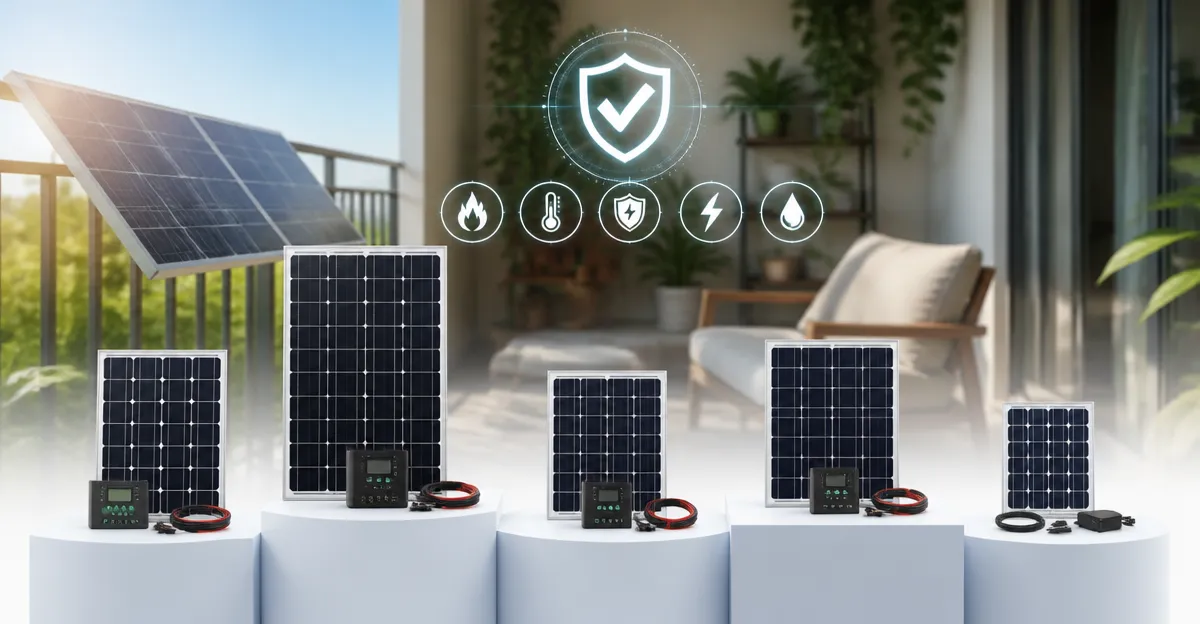
Solar power has become a cornerstone for recreational vehicle (RV) owners, boaters, and off‑grid enthusiasts who require reliable electricity without dependence on fuel‑driven generators. This article compares five Amazon‑available solar kits that span a range of power outputs, from a modest 20 W trickle charger to a robust 400 W system. By examining price, specifications, customer feedback, and real‑world performance, readers can determine which kit aligns with their energy needs, budget, and installation preferences.
The comparison matters because the market is saturated with kits that promise easy installation yet differ significantly in panel efficiency, charge‑controller technology, and durability. Selecting a kit that matches the intended use case prevents over‑paying for unnecessary capacity or, conversely, under‑powering critical devices.
Individual Product Overviews
ECO‑WORTHY 200W Solar Kit
- Price: $185.99
- Rating: 4.6/5.0 from 1,133 reviews
- Includes two 100 W monocrystalline panels, 30 A PWM charge controller, mounting brackets, and pre‑drilled cables.
- Panel efficiency claims up to 21.5 % higher than standard cells; rated for 2400 Pa wind and 5400 Pa snow loads.
- Customer quote: “I am very happy with it, so I am considering adding more panels and a more powerful inverter to go completely off‑grid.”
Renogy 400W Solar Kit
- Price: $639.99
- Rating: 4.5/5.0 from 576 reviews
- Four 100 W monocrystalline panels, 40 A MPPT charge controller, Bluetooth module, Z‑brackets, and cables.
- Maximum battery voltage 32 V; controller supports up to 100 V input.
- Customer quote: “The system took my batteries from nearly dead to full charge in a few hours while I was gardening.”
Renogy 100W Solar Starter Kit
- Price: $159.99
- Rating: 4.7/5.0 from 4,011 reviews
- One 100 W monocrystalline panel, 30 A PWM controller, Z‑brackets, 20 ft of 10 AWG cable.
- Panel efficiency 22.5 %; UL, CSA, IEC certifications; 25‑year power‑output warranty.
- Customer quote: “I get 15.4 V with sun directly overhead, and the controller knocks it down to 13.1 V, providing a stable charge for my RV battery.”
Renogy 200W Solar Kit
- Price: $159.99
- Rating: 4.6/5.0 from 1,539 reviews
- Two 100 W monocrystalline panels, 30 A PWM controller, Z‑brackets, and all required cabling.
- Claims average daily output of 1000 Wh based on five hours of direct sunlight.
- Customer quote: “The system kept our two deep‑cycle batteries fully charged during a week of camping without any generator use.”
Voltset 20W Solar Charger
- Price: $41.99
- Rating: 4.6/5.0 from 1,708 reviews
- 20 W monocrystalline panel with MPPT controller, IP67 waterproof rating, and plug‑and‑play mounting.
- Designed for 12 V batteries; includes auto‑stop charging and LED status indicators.
- Customer quote: “It kept my 1000 mca boat battery topped up even when the outboard alternator could not reach a resting voltage.”
Head‑to‑Head Comparison
Price and Value
The Voltset 20W charger is the most affordable option at $41.99, offering a low‑cost solution for maintaining a single 12 V battery. The ECO‑WORTHY 200W kit provides the best value per watt at $185.99 for 200 W, while the Renogy 200W kit matches that price but includes a slightly different controller. The Renogy 100W starter kit is priced at $159.99, delivering high‑efficiency panels at a modest cost. The Renogy 400W kit commands the highest price at $639.99, reflecting its MPPT controller, Bluetooth connectivity, and larger panel array.
Features and Specifications
Panel technology across all kits is monocrystalline, ensuring high conversion efficiency. The ECO‑WORTHY and Renogy 200W kits use 100 W panels rated for 21‑22 % efficiency, while the Renogy 100W kit advertises 22.5 % efficiency. The Renogy 400W kit combines four 100 W panels with a 40 A MPPT controller, which extracts more power from mismatched sunlight than a PWM controller. The Voltset charger employs MPPT in a compact 20 W form factor, delivering 20‑30 % faster charging compared with non‑MPPT alternatives.
Customer Ratings and Feedback
All products maintain ratings above 4.5/5.0, indicating strong satisfaction. The Renogy 100W starter kit has the highest rating (4.7) and the largest review count, suggesting broad adoption among RV owners. The ECO‑WORTHY kit receives praise for its robust construction and ease of installation, though a few users note the need for longer cables. The Renogy 400W kit is lauded for rapid battery charging and reliable Bluetooth monitoring, yet some reviewers mention that panel leads are short and required extension. The Voltset charger is commended for its simplicity and durability, with occasional concerns about over‑charging protection on long‑term unattended use.
Performance and Reliability
Real‑world performance reports indicate that the ECO‑WORTHY 200W kit can generate approximately 800 Wh per day under four hours of full sun, sufficient for small appliances in an RV. The Renogy 400W system delivers up to 336 W in ground‑mount tests, and users report full battery recharge within a few hours of strong sunlight. The Renogy 100W kit produces about 500 Wh daily, while the Renogy 200W kit aims for 1000 Wh per day under ideal conditions. The Voltset 20W charger provides a trickle charge suitable for maintaining battery voltage rather than delivering significant daily energy.
Best Use Cases
- ECO‑WORTHY 200W Solar Kit: Ideal for RVs, campers, and small marine applications where 200 W is sufficient and a PWM controller meets budget constraints.
- Renogy 400W Solar Kit: Suited for homeowners with a garden shed, hobbyists requiring faster charging, or users who value Bluetooth monitoring and MPPT efficiency.
- Renogy 100W Solar Starter Kit: Perfect for single‑battery RV installations, lightweight overland setups, or users who need a portable panel with high efficiency.
- Renogy 200W Solar Kit: Excellent for dual‑battery RV or trailer systems where expandability to 400 W is desired without immediate investment in a larger controller.
- Voltset 20W Solar Charger: Best for maintaining car, boat, or trailer batteries during short trips, or as an auxiliary trickle charger for emergency use.
Comparison Table
| Product | Power Output | Controller Type | Price (USD) | Rating | Key Warranty |
|---|---|---|---|---|---|
| ECO‑WORTHY 200W Solar Kit | 200 W (2 × 100 W) | 30 A PWM | 185.99 | 4.6/5 (1,133) | 1‑year tech support |
| Renogy 400W Solar Kit | 400 W (4 × 100 W) | 40 A MPPT | 639.99 | 4.5/5 (576) | 2‑year controller, 10‑year panel |
| Renogy 100W Solar Starter Kit | 100 W (1 × 100 W) | 30 A PWM | 159.99 | 4.7/5 (4,011) | 25‑year power output, 10‑year panel |
| Renogy 200W Solar Kit | 200 W (2 × 100 W) | 30 A PWM | 159.99 | 4.6/5 (1,539) | 2‑year controller, 10‑year panel |
| Voltset 20W Solar Charger | 20 W (1 × 20 W) | MPPT (built‑in) | 41.99 | 4.6/5 (1,708) | 1‑year limited |
Pros & Cons
ECO‑WORTHY 200W Solar Kit
- Pros: High‑efficiency monocrystalline panels, robust aluminum frame, IP65 junction box, flexible series/parallel wiring, affordable price per watt.
- Cons: PWM controller is less efficient than MPPT, cable length may be insufficient for some RV installations, no built‑in display.
Renogy 400W Solar Kit
- Pros: MPPT controller maximizes energy harvest, Bluetooth monitoring, expandable to larger systems, high‑quality cables and connectors.
- Cons: Highest upfront cost, panel leads are short requiring extensions, Bluetooth app may be less intuitive for beginners.
Renogy 100W Solar Starter Kit
- Pros: Highest customer rating, 22.5 % panel efficiency, extensive safety certifications, long‑term warranty, easy plug‑and‑play installation.
- Cons: PWM controller limits efficiency under variable light, limited to 100 W unless expanded, no built‑in LCD.
Renogy 200W Solar Kit
- Pros: Balanced price and power, solid PWM controller with 4‑stage charging, good durability, expandable to 400 W.
- Cons: Heavier panels may require stronger mounting, no MPPT technology, some users note lack of voltage/current meter.
Voltset 20W Solar Charger
- Pros: Extremely low price, MPPT technology in a compact unit, IP67 waterproof rating, tool‑free mounting, auto‑stop feature.
- Cons: Limited to trickle charging, not suitable for high‑draw applications, occasional reports of over‑charging if left unattended.
Recommendations
For a full‑time RV traveler who needs a reliable 200 W system without breaking the bank, the ECO‑WORTHY 200W Solar Kit offers the best balance of price, durability, and ease of installation.
Homeowners or hobbyists who desire faster charging, remote monitoring, and the ability to expand to larger arrays should consider the Renogy 400W Solar Kit. Its MPPT controller and Bluetooth module justify the premium cost.
Individuals seeking a lightweight, portable solution for a single battery—such as overland Jeep owners or small‑boat enthusiasts—will benefit from the Renogy 100W Solar Starter Kit, which combines high efficiency with a compact form factor.
For users who already own a dual‑battery RV system and anticipate future expansion, the Renogy 200W Solar Kit provides a solid foundation with room to add another 200 W of panels.
Finally, the Voltset 20W Solar Charger is the optimal choice for maintaining a car, boat, or trailer battery during short trips or as an emergency backup.
FAQ
- Can I connect the ECO‑WORTHY panels in series to create a 24 V system? Yes, the kit allows series wiring for 24 V configurations or parallel wiring for 12 V, providing flexibility for different battery banks.
- Is the Renogy 400W MPPT controller compatible with lithium‑ion batteries? The controller supports sealed, gel, flooded, and lithium batteries, making it suitable for most 12 V lithium‑ion packs.
- How does MPPT differ from PWM, and why does it matter? MPPT (Maximum Power Point Tracking) continuously adjusts the voltage to extract the highest possible power from the panel, resulting in up to 30 % more efficiency compared with PWM, which simply clamps the voltage to the battery level.
- Will the Voltset 20W charger work in freezing temperatures? The charger is rated for operation down to –40 °F, and its IP67 enclosure protects the electronics from moisture and snow.
- Do any of these kits include surge protection for lightning strikes? All kits feature built‑in reverse polarity and over‑charge protection, but only the Renogy kits explicitly mention surge‑resistant connectors; additional external surge protectors are recommended for high‑risk areas.
- Can I monitor the Renogy 400W system without a smartphone? The controller includes LED indicators that show charging status, but detailed metrics such as voltage and current require the Bluetooth app on a smartphone.
- Is professional installation required for any of these kits? None of the kits mandate professional installation; each includes pre‑drilled mounting holes and comprehensive manuals, though users unfamiliar with electrical work should consult a qualified technician for battery connections.
Conclusion
Each solar kit examined offers a distinct blend of power, price, and features. The ECO‑WORTHY 200W kit stands out for budget‑conscious RV owners who need dependable 200 W capacity. The Renogy 400W kit excels for users demanding high efficiency and remote monitoring, despite its higher cost. The Renogy 100W starter kit provides a compact, high‑efficiency solution for single‑battery setups, while the Renogy 200W kit delivers a middle ground with expandability. The Voltset 20W charger fulfills the niche of low‑power maintenance for vehicles and small marine applications.
By matching the kit to the specific energy demand, installation constraints, and budget, one can achieve reliable off‑grid power without unnecessary expense.
Products Mentioned in This Review
Frequently Asked Questions
What factors should I consider when choosing an RV solar kit?
Consider power output, panel efficiency, charge controller type (PWM vs MPPT), durability, and budget to match your energy needs.
How does a PWM charge controller differ from an MPPT controller?
PWM controllers are simpler and cheaper but less efficient, while MPPT controllers convert more solar power into usable electricity, especially in low-light conditions.
Is a 200W solar kit sufficient for typical RV appliances?
A 200W kit can run lights, small fans, and charge batteries, but high‑draw devices like microwaves may require larger systems.
Can I install the solar panels on a boat without professional help?
Yes, most kits include mounting hardware and step‑by‑step guides, making DIY installation feasible for most boat owners.
What warranty and customer support do the Amazon‑available kits offer?
Most kits provide a 1‑year warranty on panels and controllers, with responsive Amazon seller support for replacements or troubleshooting.