Ultimate End-of-Life Recycling Guide for Plug-and-Play Solar Panels: Disposal, Repurposing & Best Practices
Introduction
The rapid adoption of plug-and-play solar solutions has created a new challenge: what should owners do when a panel reaches the end of its useful life? This guide explains the full lifecycle of residential and mobile solar panels, outlines responsible disposal pathways, and highlights creative repurposing ideas. Readers will learn how to assess panel condition, navigate recycling programs, and select complementary products that simplify the transition to newer technology.
By the end of this article, you will understand regulatory requirements, compare recycling services, and have actionable steps for extending the value of your solar investment. The guide also integrates five highly rated Amazon products that can aid in safe removal, storage, and system upgrades.
Background & Context
Plug-and-play solar panels are typically monocrystalline or bifacial modules designed for quick installation on rooftops, vans, RVs, and small off‑grid systems. Their construction includes tempered glass, an aluminum frame, a junction box, and semiconductor cells that may contain small amounts of hazardous materials such as lead‑based solder or cadmium in rare cases. While the overall environmental impact of solar power is positive, improper disposal can release these substances into soil and water.
Most manufacturers offer a 10‑year technical support window and a 25‑year performance guarantee, which means many panels remain functional well beyond the warranty period. However, performance degradation, physical damage, or system upgrades can render a panel obsolete. Understanding the difference between recycling (recovering valuable silicon and metal) and repurposing (finding a second‑life application) is essential for maximizing environmental benefits.
Regulations vary by jurisdiction, but the United States Environmental Protection Agency (EPA) classifies solar panels as electronic waste (e‑waste). Many states require certified recyclers to handle the glass, metal, and semiconductor components separately. The following sections break down the practical steps you can take, from a simple visual inspection to partnering with a certified recycler.
Assessing Panel Condition
Before deciding on disposal or repurposing, conduct a systematic assessment. First, measure the open‑circuit voltage (Voc) and short‑circuit current (Isc) using a multimeter; values that fall below 80% of the original specifications often indicate irreversible degradation. Second, inspect the glass for micro‑cracks, delamination, or discoloration, which can compromise safety and efficiency. Third, examine the junction box for corrosion, especially in coastal environments where salt spray accelerates wear.
If the panel passes visual and electrical checks, consider repurposing it for low‑power applications such as garden lighting, battery trickle charging, or educational kits. If the panel shows significant performance loss or physical damage, recycling is the responsible choice.
Recycling Pathways
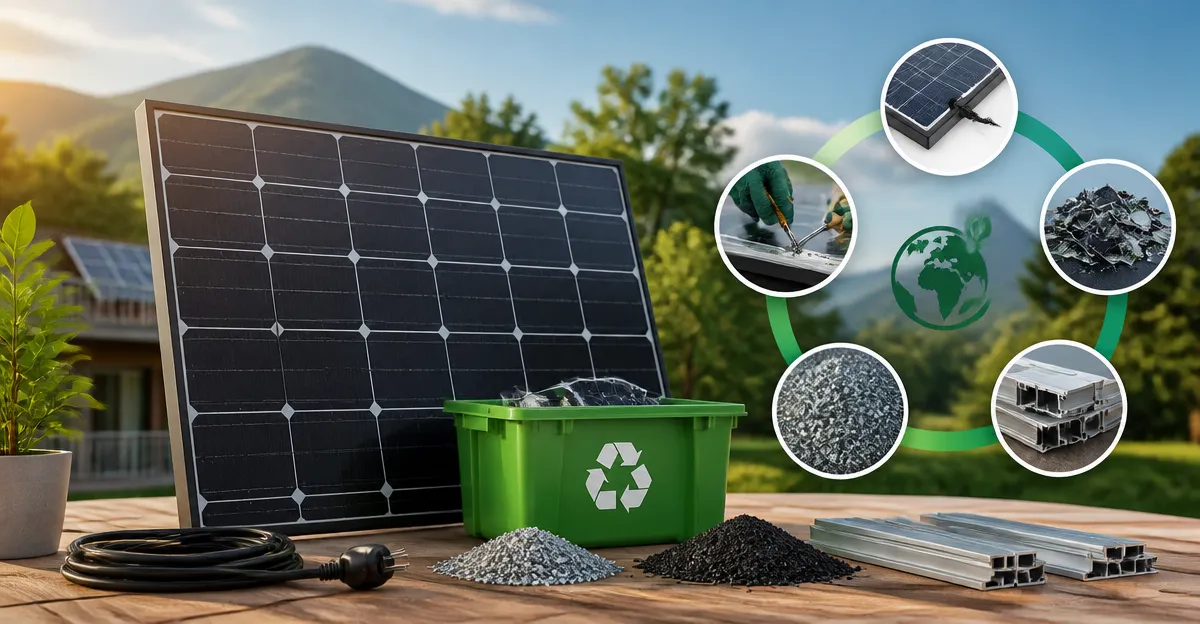
Certified solar recyclers employ a multi‑stage process. The first stage involves manual disassembly to separate the aluminum frame, tempered glass, and junction box. The second stage uses mechanical shredding and chemical leaching to recover silicon wafers, silver paste, and copper wiring. The recovered materials can re‑enter the manufacturing supply chain, reducing the need for virgin extraction.
In the United States, organizations such as Solar Recyclers Association maintain directories of accredited facilities. Many utilities also offer take‑back programs that cover transportation costs for bulk shipments. When arranging pickup, provide the panel’s model number, weight (approximately 23.8 lb for a typical 200 W unit), and any hazardous labeling.
For international readers, the European Union’s Waste Electrical and Electronic Equipment (WEEE) directive mandates similar recycling obligations, and many manufacturers have global take‑back schemes.
Repurposing Strategies
Repurposing extends a panel’s useful life while avoiding the energy cost of recycling. One common approach is to use a de‑rated panel in a “solar shed” configuration, where the panel powers low‑draw devices such as LED lighting, small fans, or a micro‑inverter for battery charging. Because bifacial panels capture reflected light, mounting them slightly above the ground or on a reflective surface can improve output even at reduced efficiency.
Another strategy involves integrating the panel into educational kits for schools. Students can learn about photovoltaic principles by wiring a panel to a small load, measuring voltage, and observing the effect of shading. Finally, panels can be donated to community gardens or remote cabins where modest power is sufficient.
When repurposing, ensure the panel’s wiring is compatible with the new system’s voltage and current limits. Use proper connectors, such as MC4 plugs, and incorporate a charge controller to prevent over‑charging of batteries.
Recommended Products for Safe Removal & System Upgrade
Choosing the right tools and complementary equipment simplifies both recycling and repurposing. The following products are highly rated on Amazon and align with the guide’s objectives.
- Callsun 400W Bifacial Solar Panel – This N‑type 16BB panel offers 25.6% efficiency, a low temperature coefficient of –0.3%/K, and a robust IP68‑rated junction box. Priced at $294.05 with a 4.7‑star rating, it serves as an ideal replacement when older panels are recycled.
- ZeroKor 300W Solar Generator – A portable power station with a built‑in 60W monocrystalline panel, MPPT charge controller, and multiple AC/DC/USB outputs. At $169.97 and a 4.1‑star rating, it provides backup power while you transition to new panels.
- Rvpozwer 100W Solar Panels – Two 100W N‑type modules with 18BB technology, priced at $71.99 and rated 4.3 stars. Their lightweight design makes them perfect for experimental repurposing projects.
- ECO-WORTHY 400W Solar Panels – A set of four 100W bifacial panels delivering up to 25% efficiency. At $195.99 and a 4.5‑star rating, they are suitable for scaling up a repurposed system.
- HQST 400W Bifacial Solar Panel – Two 200W N‑type panels with 16BB cells, lightweight construction, and IP65 protection. Priced at $229.99 with a 4.5‑star rating, they are ideal for high‑performance replacements.
Comparison & Selection Guide
When choosing a replacement or supplemental panel, consider three core criteria: efficiency, form factor, and durability. Efficiency determines how much power you can harvest per square foot; form factor influences installation on limited rooftop space; durability dictates long‑term reliability in harsh climates.
| Product | Power (W) | Efficiency | Dimensions (in) | Weight (lb) | Rating |
|---|---|---|---|---|---|
| Callsun 400W Bifacial Solar Panel | 400 (2×200) | 25.6% | 51.3 × 30.3 × 1.4 | 23.8 | 4.7 |
| ZeroKor 300W Solar Generator | 300 (AC output) | 20.5% (panel) | Portable unit | ~15 | 4.1 |
| Rvpozwer 100W Solar Panels | 100 (per panel) | ≈25% | ≈39 × 26 × 1.2 | ≈7 | 4.3 |
| ECO‑WORTHY 400W Solar Panels | 400 (4×100) | 25% | Varies (100W units) | ≈30 total | 4.5 |
| HQST 400W Bifacial Solar Panel | 400 (2×200) | 25.4% | 30.1 × 46.3 × 1.2 | 20.17 (per 200W) | 4.5 |
For users with limited roof space, the Callsun and HQST 200W bifacial modules provide high output in a compact footprint. If budget is the primary concern, the Rvpozwer 100W pair delivers respectable efficiency at a low price. For mobile or emergency scenarios, the ZeroKor generator offers integrated storage and multiple output options, though its continuous AC rating is below the advertised 300 W.
Durability considerations include the panel’s glass rating (tempered vs. laminated), frame material (aluminum vs. steel), and ingress protection (IP68 vs. IP65). Bifacial designs such as Callsun and HQST gain extra energy from reflected light, which can be advantageous when mounting panels above reflective surfaces during repurposing.
Best Practices & Tips
1. Document Serial Numbers: Keep a record of each panel’s serial number, purchase date, and warranty terms. This simplifies warranty claims and recycling verification.
2. Use Proper Lifting Equipment: Panels weigh between 7 lb and 24 lb. Employ suction cups or padded straps to avoid cracking the tempered glass during removal.
3. Disconnect Safely: Turn off all charge controllers and isolate the panel from the battery bank before removal. Use insulated tools to prevent accidental short circuits.
4. Label Wiring: Clearly label MC4 connectors and any branch circuits. This reduces errors when re‑configuring a repurposed system.
5. Store in a Dry Environment: If you plan to reuse panels later, store them in a climate‑controlled area, away from direct sunlight and moisture.
6. Leverage Bifacial Benefits: When repurposing, mount panels on a reflective substrate such as white roofing material or a metal sheet to capture rear‑side irradiance.
7. Partner with Certified Recyclers: Verify that the recycler follows ISO 14001 environmental management standards. Request a certificate of destruction for audit purposes.
Frequently Asked Questions
- Can I recycle solar panels myself? Individual recycling is not recommended because it requires specialized equipment to safely separate glass, silicon, and metals. Most municipalities provide drop‑off points or partner with certified recyclers.
- How long does a solar panel remain functional? Panels typically retain 80% of their original output after 25 years. Degradation rates vary, but N‑type cells often degrade slower than P‑type.
- Is it legal to dump old panels in the trash? In most U.S. states, solar panels are classified as e‑waste and must be diverted from landfills. Violations can result in fines.
- What is the best way to test a panel before recycling? Measure Voc and Isc under open‑circuit conditions, compare to the manufacturer’s specifications, and inspect for physical damage.
- Can bifacial panels be used indoors? Yes, if a reflective surface is installed behind the panel. Indoor lighting, however, provides insufficient irradiance for meaningful output.
- Do I need a new charge controller for repurposed panels? A modern MPPT controller is recommended because it maximizes energy harvest, especially when panel voltage differs from the battery bank.
- Are there tax incentives for recycling solar panels? Some states offer rebates for solar waste diversion, and the federal Investment Tax Credit (ITC) applies only to new installations, not recycling.
Conclusion
The end‑of‑life phase of plug‑and‑play solar panels presents an opportunity to reinforce sustainable practices. By assessing panel condition, choosing certified recycling routes, or creatively repurposing modules, owners can minimize waste and extract maximum value. Selecting high‑efficiency, durable replacements—such as the Callsun, HQST, or ECO‑WORTHY panels—ensures future installations remain both environmentally and economically sound. Follow the best‑practice checklist, stay informed about local regulations, and treat each panel as a valuable resource rather than disposable trash.
Products Featured in This Guide
Callsun 400W Bifacial Solar Panel
Price: $294.05 | Rating: 4.7/5 (228 reviews)
Featured for its high 25.6% efficiency, bifacial design, and robust IP68 junction box, making it an excellent replacement when older panels are recycled.
ZeroKor 300W Solar Generator
Price: $169.97 | Rating: 4.1/5 (1,964 reviews)
Provides portable backup power and includes a 60W monocrystalline panel, useful during system upgrades or as a temporary power source.
Rvpozwer 100W Solar Panels
Price: $71.99 | Rating: 4.3/5 (124 reviews)
Low‑cost, 18BB N‑type panels ideal for experimental repurposing projects or supplemental power in small off‑grid setups.
ECO-WORTHY 400W Solar Panels
Price: $195.99 | Rating: 4.5/5 (610 reviews)
Four 100W bifacial modules offering 25% efficiency, suitable for scaling up repurposed systems or creating a new high‑output array.
HQST 400W Bifacial Solar Panel
Price: $229.99 | Rating: 4.5/5 (1,367 reviews)
Compact, lightweight 200W N‑type panels with 16BB cells and IP65 protection, perfect for high‑performance replacements in limited spaces.